TINCTURES
Two metals, bold colours
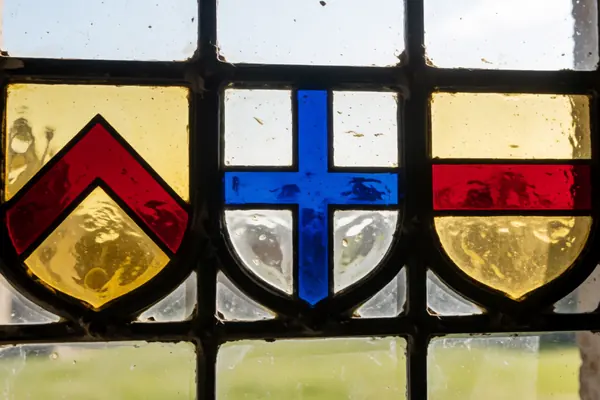
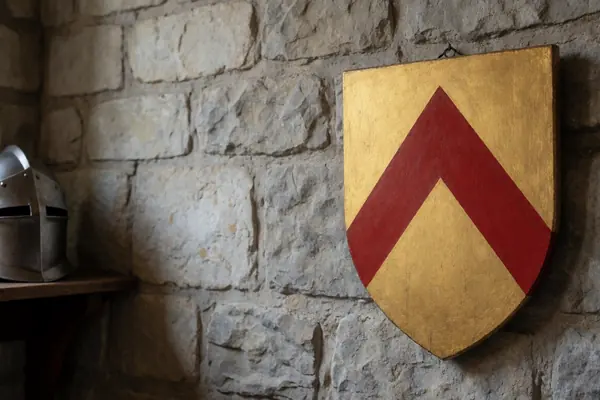
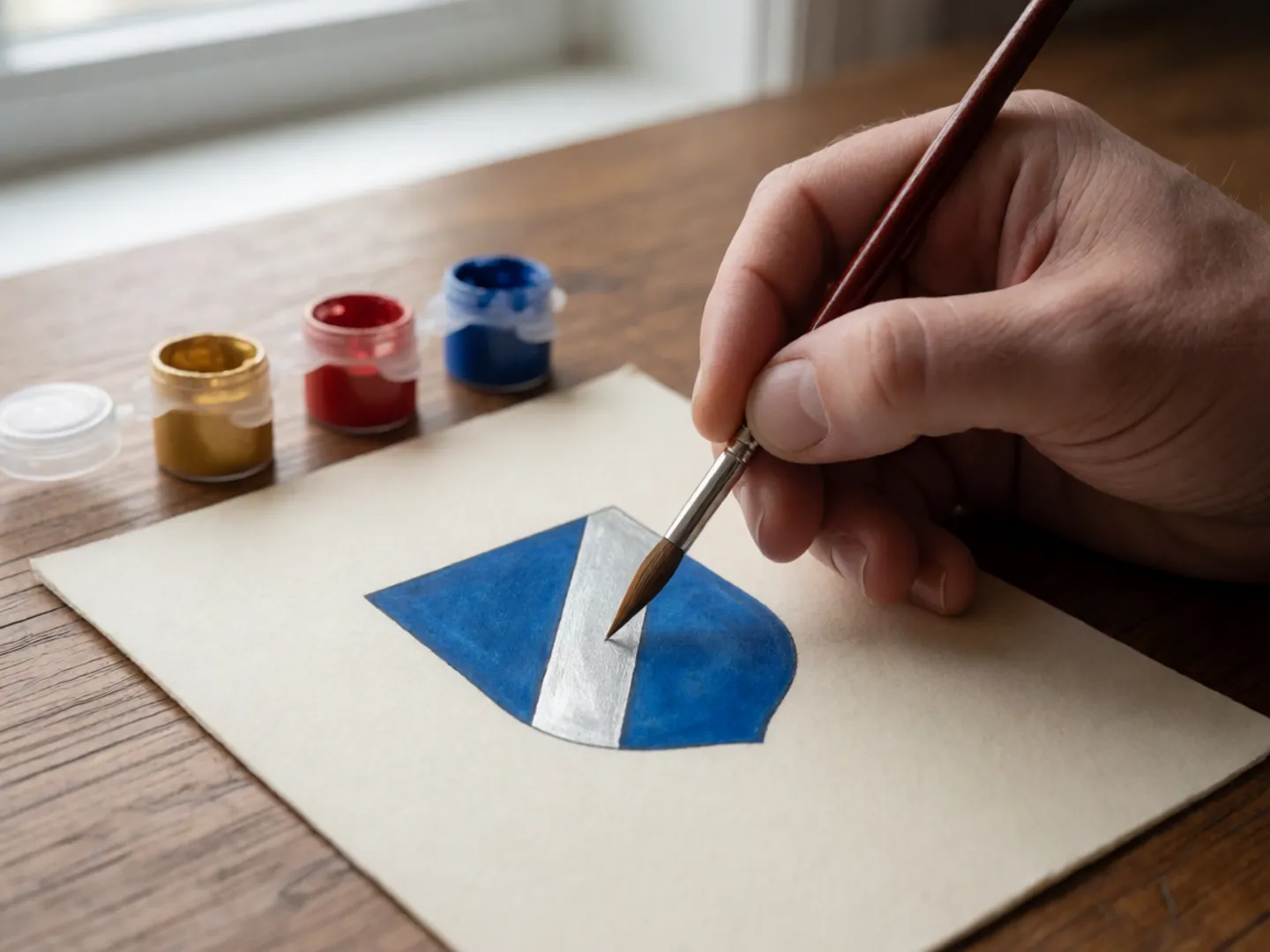
Gold and silver are the metals; red, blue, green, black and purple are the main colours. A metal never goes on a metal, nor a colour on a colour.
Read the parts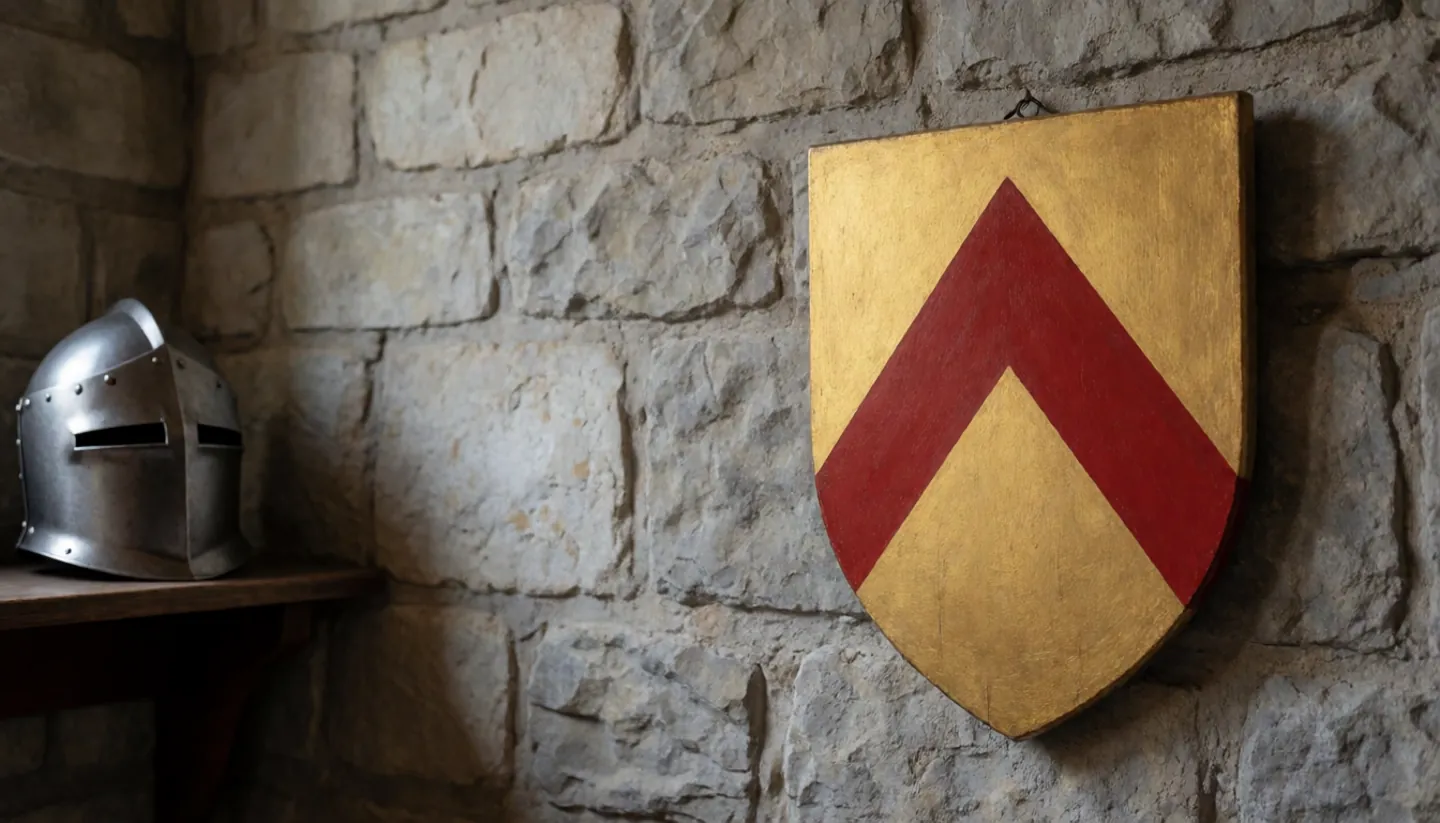
HERALDRY IN PLAIN ENGLISH
OR · GULES no metal on metal
AI-generated image, not a photograph of a real person or place.
Heraldry began as a way to tell knights apart.
The Heraldry Society defines it as the systematic use of hereditary devices centred on the shield. Its rules on colour, shapes and wording are strict enough that a written description can rebuild a coat of arms exactly.
THE SHORT ANSWER
A full achievement of arms can have many parts.
Only the shield is essential.
TINCTURES
Gold and silver are the metals; red, blue, green, black and purple are the main colours. A metal never goes on a metal, nor a colour on a colour.
Read the partsTHE ARTIST
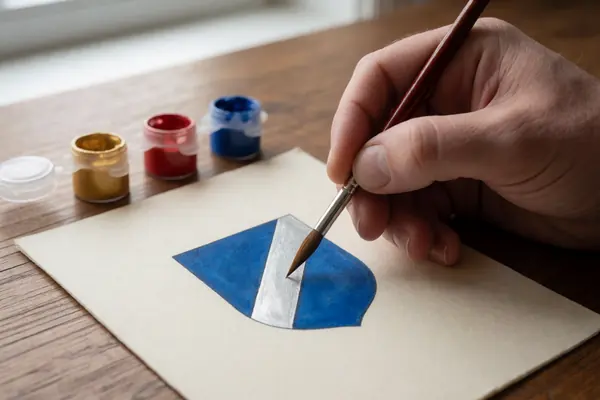
The blazon is the written description of the arms. Artists choose the exact shade: heraldic colours are simply bold and bright, like a child's paintbox.
Read a blazonTHE FAMILY MYTH
Arms are granted to one named person and their heirs, not to a surname. The crest is only the part above the helmet.
Who owns arms?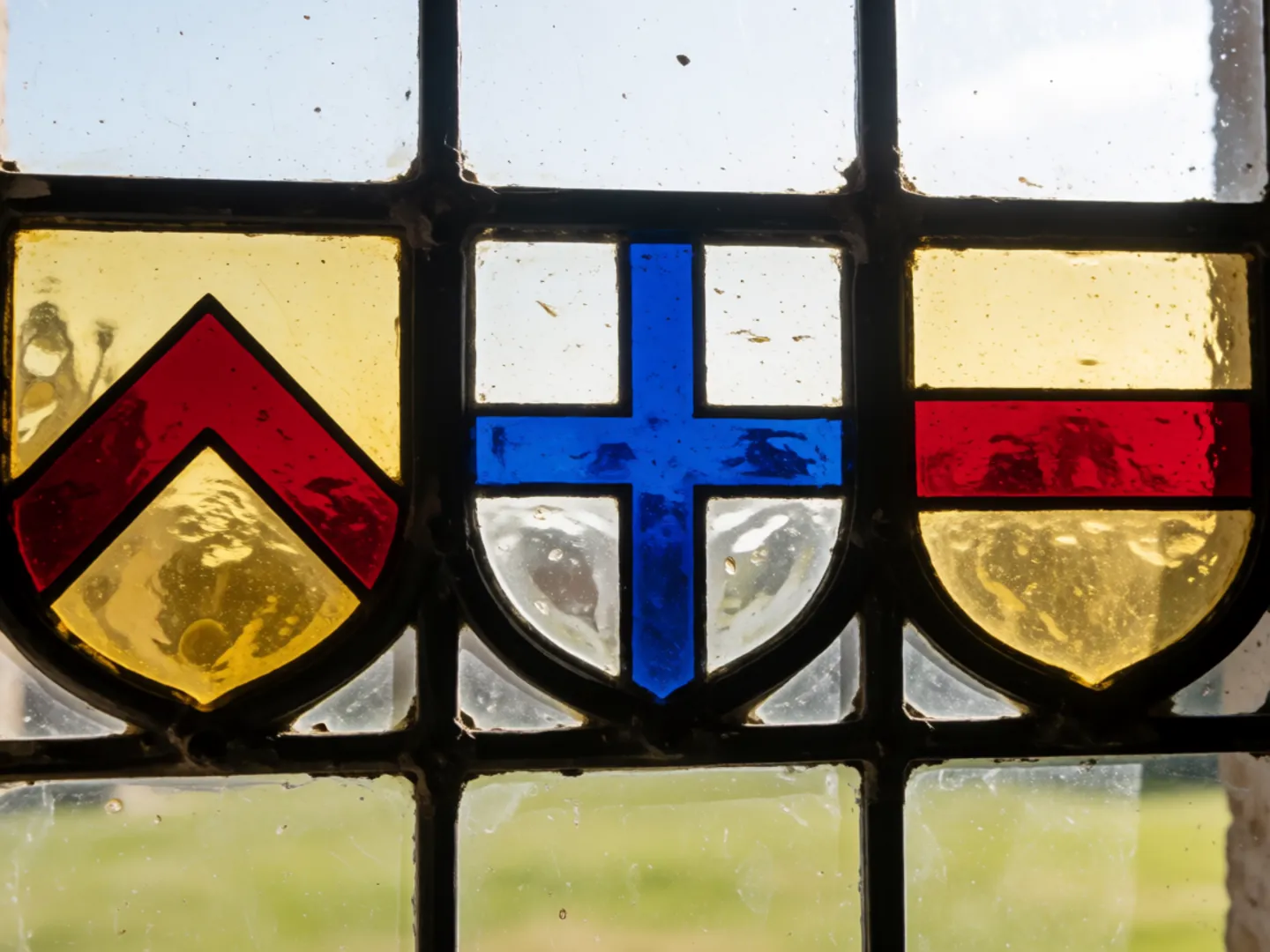
HOW TO READ A BLAZON
The blazon mixes English, Norman French and Latin. The Court of the Lord Lyon teaches this reading order.
The first tincture named is the background of the shield, such as Argent (silver) or Gules (red).
Next comes the main shape or object on the field, from a simple geometric ordinary to a beast.
Charges not in the centre follow, then anything placed on top of those.
Dexter means right and sinister left, from the view of the person holding the shield, not the viewer.
TWO NUMBERS WORTH KNOWING
One date for heraldry's first formal appearance,
one rule that keeps every shield unique.
1128
First formal appearance of heraldry
The Heraldry Society dates heraldry as we know it to 1128, when Henry I presented a shield to Geoffrey of Anjou at his knighting. Richard III founded the College of Arms in 1484.
ORIGINS · HERALDRY SOCIETY
2 differences
Differences needed between two coats of arms
Within a heraldic authority, arms must differ by at least two differences, not counting a change of colour. A red shield with a gold lion is not unique against one with a silver lion.
UNIQUENESS · HERALDRY SOCIETY
Grants of arms are still made today: by the College of Arms for England, Wales and Northern Ireland, and by the Court of the Lord Lyon for Scotland.
PARTS OF A COAT OF ARMS
Pick a part to see what it tells you. The bar shows how central that part is to the arms themselves.
Based on the Heraldry Society's guides and the Court of the Lord Lyon's blazoning notes. Rules differ in places between England and Scotland.
WHO OWNS A COAT OF ARMS
Coats of arms are granted to a single named person and their heirs. There is no coat of arms for a surname, and the Heraldry Society warns that 'family crest' pictures sold online are at best images of someone else's arms.
There are no fixed meanings for colours or symbols either: whatever the designer intended stays with that coat of arms. The society's test for good design is that a young child could draw and paint it from memory.
In conversation
No. The Heraldry Society says there is no such thing and never was. The crest is the part above the helmet, and coats of arms belong to individuals and their heirs, not to everyone with a surname.
The Court of the Lord Lyon lists Or (gold), Argent (silver, usually shown as white), Sable (black), Azure (blue), Gules (red) and Vert (green). Purple is also used, as are furs.
Metals should never be placed on metals and colours never on colours, so no gold on silver and no blue on black. It keeps arms easy to recognise at a glance.
Not fixed ones. The Heraldry Society says any meaning belongs to the person who designed a particular coat of arms and does not transfer to others, though some elements, such as a peer's coronet, show rank.
In the UK, arms may be granted to subjects of the Crown of good character and sufficient eminence, and to legal bodies such as councils, universities and companies. Scotland has its own authority, the Court of the Lord Lyon.
Each figure on this page comes from the sources below.
ABOUT THIS NAME
doodleroyal.com is part of the DoodleSale portfolio. It isn't in an auction right now, but you can ask about leasing it.